
Yoga for Autumn: A Time to Surrender
Grounding, Letting Go, and Moving Gracefully With the Season
Why Autumn Calls Us to Surrender
When summer’s bright blaze softens into crisp mornings and gold‑leaf sunsets, something inside us naturally shifts. The air cools, the wind picks up, and nature begins her grand exhale—dropping what’s no longer needed in a blaze of color. In Ayurveda, autumn is the season of Vata dosha (air + ether), characterized by movement, dryness, lightness, and change. If we don’t intentionally ground and pace ourselves, these qualities can spin us into overwhelm, anxiety, or straight‑up burnout.
Yoga offers a gentle roadmap for surrendering to autumn’s rhythm—trading summer’s outward buzz for inward reflection, slower flows, and deeper breaths. Below you’ll find a fully refreshed guide—expanded, SEO‑ready, and easy on the eyes—covering the essence of autumn yoga, key practices, lifestyle tweaks, FAQs, and a clear conclusion so you can step off the mat feeling rooted, spacious, and ready for the cozy months ahead.
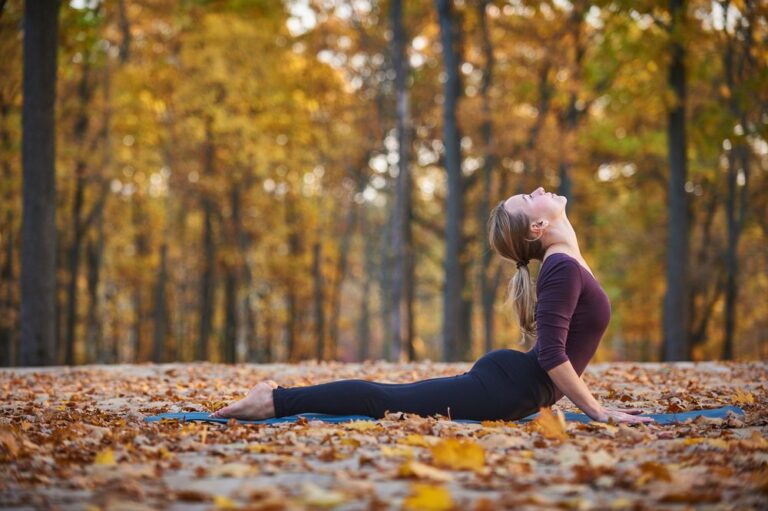
1. Anchor With Autumn‑Friendly Asanas
a. Slow, Fluid Warm‑Ups
Start class or home practice with movements that mimic falling leaves—slow circles of the arms, gentle Cat‑Cow, or rolling down and up through the spine. Keep breath audible and steady; imagine drawing warmth to the core while softening the outer body.
b. Standing Poses for Stability
- Tree Pose (Vrikshasana): Press down through your supporting foot, lengthen the spine, and focus your gaze on a fixed point.
- Warrior II (Virabhadrasana II): Wide stance, soft shoulders—think “root to rise.”
- Triangle (Trikonasana): Expand side ribs, but keep micro‑engagement through lower belly to avoid hyper‑mobility that Vata loves.
c. Hip‑Opening Grounders
Autumn winds collect tension in hips and low back. Invite release with:
- Lizard (Utthan Pristhasana)—move slowly; hold 5–10 breaths.
- Half Pigeon (Ardha Kapotasana)—support hips with blankets for longer holds.
d. Forward Folds & Twists

- Seated Forward Fold (Paschimottanasana): Soothes the nervous system; use a strap if hamstrings feel tight.
- Supine Twist (Supta Matsyendrasana): Gentle detox for digestive organs, perfect after seasonal meals.
e. Restorative Finisher
Legs‑Up‑the‑Wall (Viparita Karani)—5–10 minutes with a blanket over belly. Consciously lengthen exhalations: inhale for 4, exhale for 6‑8 counts.
Tip: Practice in a warm, draft‑free space. Layer clothing so you can peel off during flows and bundle up for long holds.
2. Dial In Breathwork for Windy Days
Vata season = windy season. Harness the air element with calm, rhythmic pranayama.
| Breath Technique | How‑To | Why It Works in Autumn |
|---|---|---|
| Nadi Shodhana (Alternate‑Nostril) | Inhale left, exhale right; inhale right, exhale left. Repeat 5–7 cycles. | Balances right/left hemispheres, eases anxiety, smooths erratic energy. |
| Ujjayi (Ocean Breath) | Slight constriction in throat; inhale & exhale through nose with soft “ha” sound. | Generates inner warmth, maintains focus during slow flow. |
| Bhramari (Bee Breath) | Thumbs on tragus, hum on exhale. 6–10 rounds. | Vibrates skull, soothing frazzled nerves; excellent before savasana or bed. |
3. Set the Mood: Seasonal Props, Scents & Sounds
- Props: Fluffy blankets, bolsters, sandbags on hips—all reassure the body it’s safe to relax.
- Aromatherapy: Diffuse grounding oils—cedarwood, sweet orange, vetiver, cardamom.
- Soundscape: Soft instrumental, crackling‑fire playlist, or silent minus ticking clocks (Vata hates jumpy sounds).
4. Eat and Live in Step With Autumn
Yoga doesn’t end at the mat. What you sip, chew, and binge‑watch influences how balanced you feel.
a. Nourishing Foods
- Warm & moist: Stews, kitchari, roasted root veggies, oatmeal with ghee.
- Sweet, sour, salty tastes pacify Vata—think dates, miso broth, a pinch of mineral salt.
- Herbal teas: Ginger‑licorice, cinnamon‑cardamom, or simply hot water with lemon.
b. Lifestyle Tweaks
| Habit | Why It Helps |
|---|---|
| Regular sleep/wake times | Consistency calms the mobile Vata mind. |
| Daily self‑massage (Abhyanga) with sesame or almond oil | Lubricates dry skin/joints, signals safety to the nervous system. |
| Digital sunset—screens off 1 hr before bed | Reduces stimulation; promotes melatonin. |
5. Mini‑Sequence: 20‑Minute Autumn Flow
- Seated Breath & Intention – 2 min
- Cat‑Cow – 1 min
- Sun‑Breath Flow (Half Sun Salutation with Chair + Forward Fold) – 3 min
- Warrior II → Triangle – 3 min each side
- Lizard to Half Pigeon – 4 min total
- Seated Forward Fold – 2 min
- Supine Twist – 2 min total
- Viparita Karani + Bee Breath – 3 min
Finish with palms to heart, whispering a simple mantra: “I release what I no longer need.”
Table of Contents
Frequently Asked Questions (FAQs)
Q: I feel extra anxious in autumn. Which pose is the quickest fix?
A: Legs‑Up‑the‑Wall is a nervous‑system superhero. Add a folded blanket over your belly and breathe slowly for five minutes.
Q: Can I still do fast power yoga classes?
A: Sure—just balance them with grounding practices. If you crave sweat, keep sessions midday (when Kapha anchors you) and close with longer savasana or yin shapes.
Q: My skin gets Sahara‑dry after hot yoga. Any suggestions?
A: Swap hot classes for warm, humidified rooms. Post‑practice, slather warm sesame oil on damp skin, then rinse with lukewarm shower to lock in moisture.
Q: How many times a week should I practice in autumn?
A: Aim for 3–5 days. Mix 1–2 heat‑building flows, 1–2 restorative/yin sessions, and a bonus breath‑or‑meditation‑only day.
Q: I get seasonal sniffles. Does yoga help?
A: Gentle inversions (Dolphin, Supported Shoulderstand) plus Kapalabhati breath can keep sinuses clear. Pair with turmeric‑ginger tea for anti‑inflammatory support.
Conclusion: Let the Leaves Teach You
Autumn is nature’s masterclass in letting go with grace. Trees don’t cling to fading leaves; they open their branches and trust the cycle. Your practice can mirror that wisdom—ground through steady legs, breathe through the winds of change, and soften into surrender.
By syncing movement, breath, food, and daily rhythms with Vata season, you’ll trade scattered energy for steady calm, dryness for inner fluidity, and overwhelm for mindful presence. Roll out your mat, wrap yourself in a cozy blanket for savasana, and remember: just like the trees, you can shed what no longer serves and stand tall in your quiet strength.